How The Hills Shire Got a Quarter of Ratepayers Onto Payble
Most councils get 4 to 10% of ratepayers onto a recurring rates payment plan. The Hills Shire Council, a council of 80,000 properties in New South Wales, hit a quarter of its ratepayer base in eight months.
This case study covers exactly how The Hills Shire Council did it: a redesigned rate notice with one payment method on the front, a six-channel promotion campaign that all pointed to the same page, a council-made how-to video, and a habit of reading the low ratings instead of just celebrating the five-star ones.
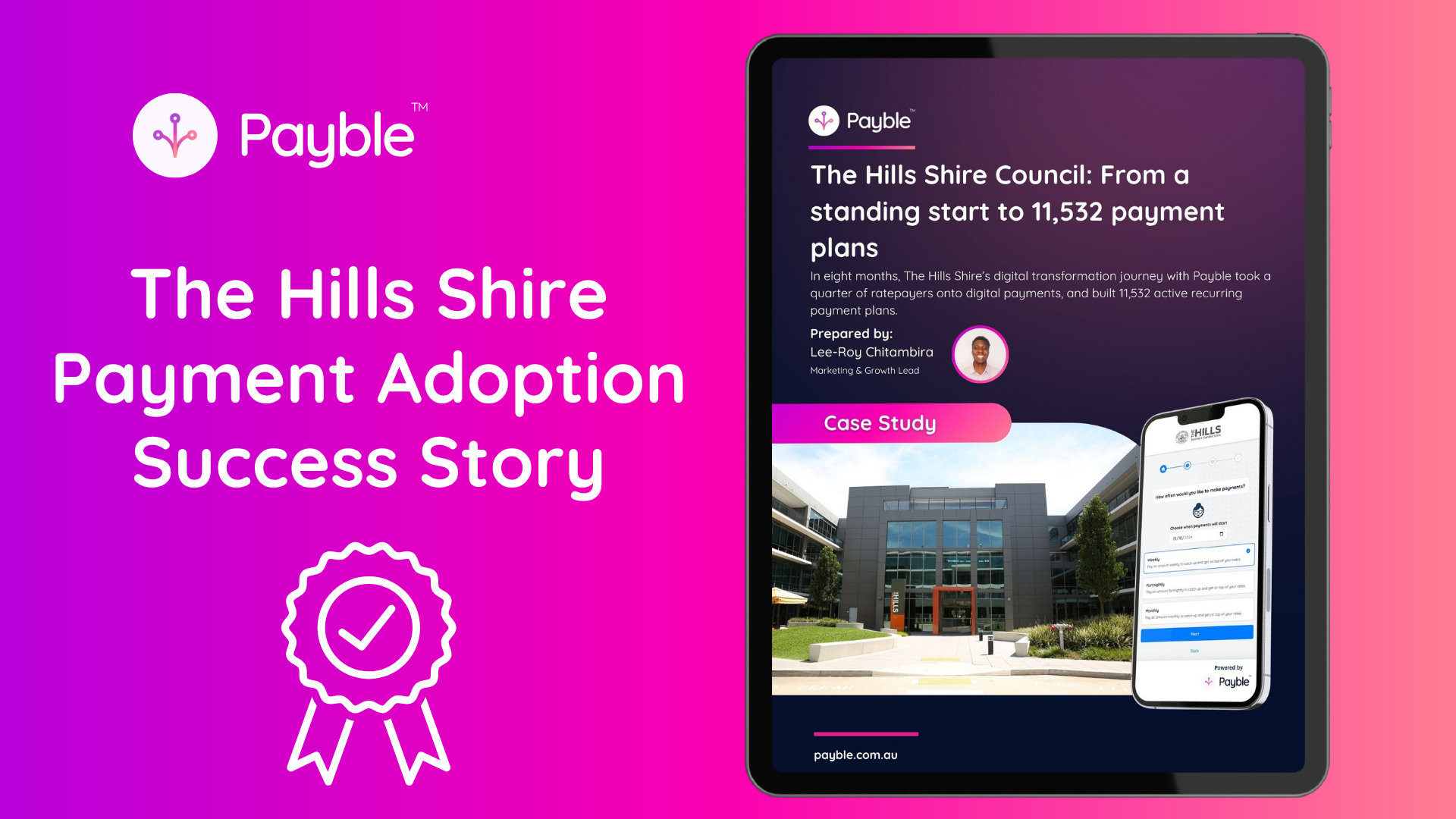
What you'll get
What you will get
The month-by-month adoption numbers, the full rollout timeline, and seven moves any council can copy.

A quarter of ratepayers are on Payble in eight months.
The Hills Shire Council went from a standing start in January 2026 to 11,532 active payment plans by September, against a sector average of 4 to 10%.

One payment method on the front of the notice was the biggest driver.
Moving Payble to the front of the rate notice, on its own, was the change that mattered most. Active plans more than tripled in the first month alone.

Payble is now the second most used payment method at The Hills.
Behind BPAY, and ahead of phone, post and card payments, all within eight months of launch.
Latest Webinars

How Whitehorse Automated Animal Renewals and Cut Non-Payment from 10% to 7%
Only 12–14% of Whitehorse's animals were registered under the old paper-based renewal process. See how self-service QR renewals, auto-reconciliation and set-and-forget payments turned that around in a single renewal cycle — and what it freed up for staff.

How Hutt City Council Modernised Rates Payments and Prepared for Water Reform
Hutt City managed rates the same way for 25+ years. Arrears hit 5%. Direct debit stalled at 44%. Then they went live with Payble - and processed $5.5M across 21,354 plans without staff loading a single one.
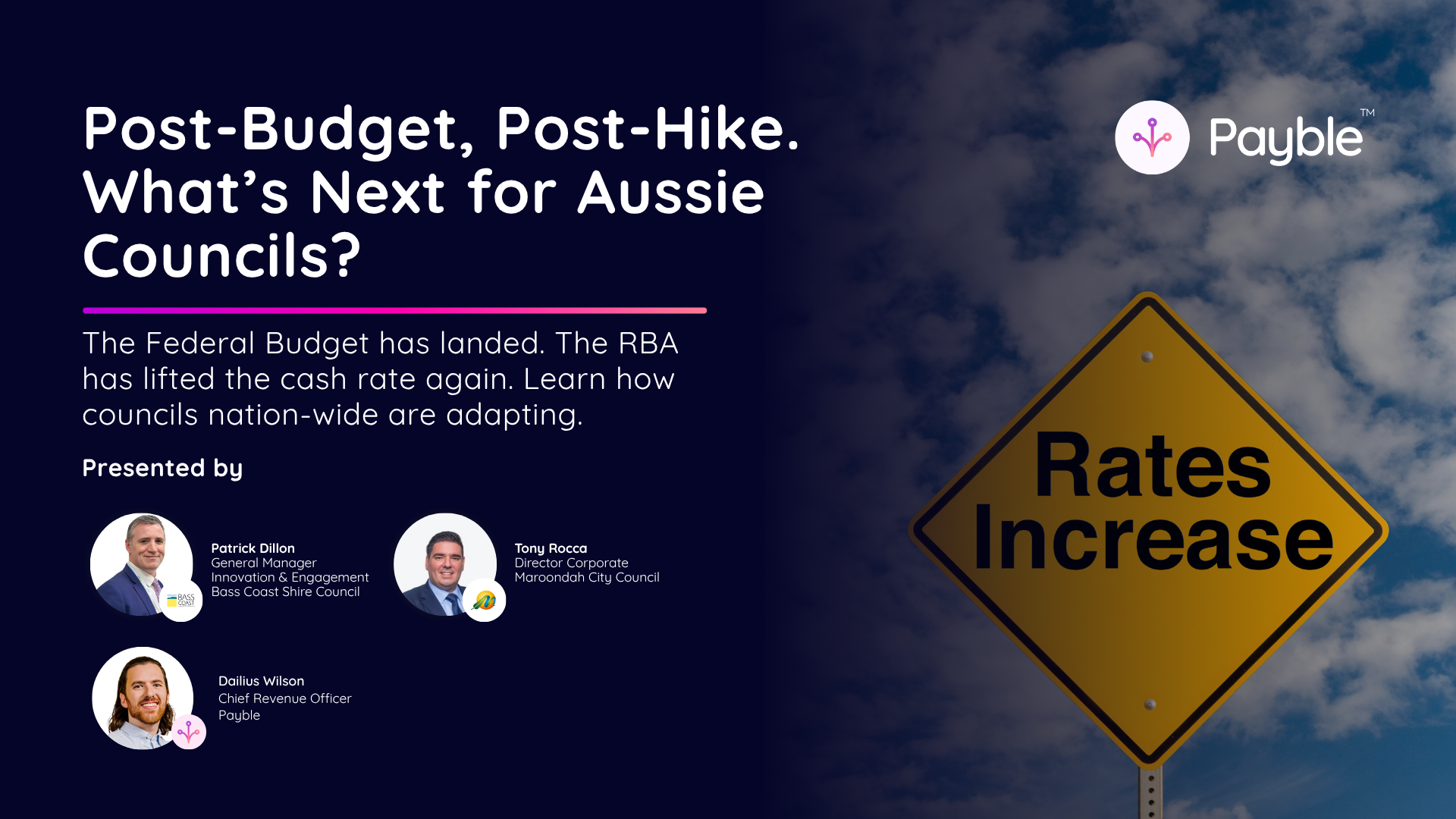
Post-Budget, Post-Hike: What Australian Councils Must Do Now to Protect Cash Flow
Rate caps are rising at half the pace of inflation, infrastructure costs haven't dropped since COVID, and arrears are compounding. In this roundtable, council leaders unpack the four federal budget measures squeezing local government and the four levers councils can act on now to protect cash flow and financial sustainability.

