Whitehorse City Council: From Reactive to Proactive Animal Renewals
782 auto-renewal plans. $232,159 processed. Not one payment reconciled by hand.
Whitehorse City Council ran animal renewals the same way for decades - printed notices posted to every registered household, changes phoned or emailed in, and staff chasing non-payers through reminders, door-knocks and infringements. Only an estimated 12-14% of animals were registered, so the register never reflected the real community. BPay payments came in over or under and had to be refunded and reconciled one by one, swallowing the team's time during the busiest weeks of the year.
This case study documents how Whitehorse went from reactive to proactive in a single renewal cycle - cutting non-payment from 10% to 7.3%, shifting 95.6% of residents to mobile self-service, and freeing staff for the work that matters: data cleansing, education and pet reunification.
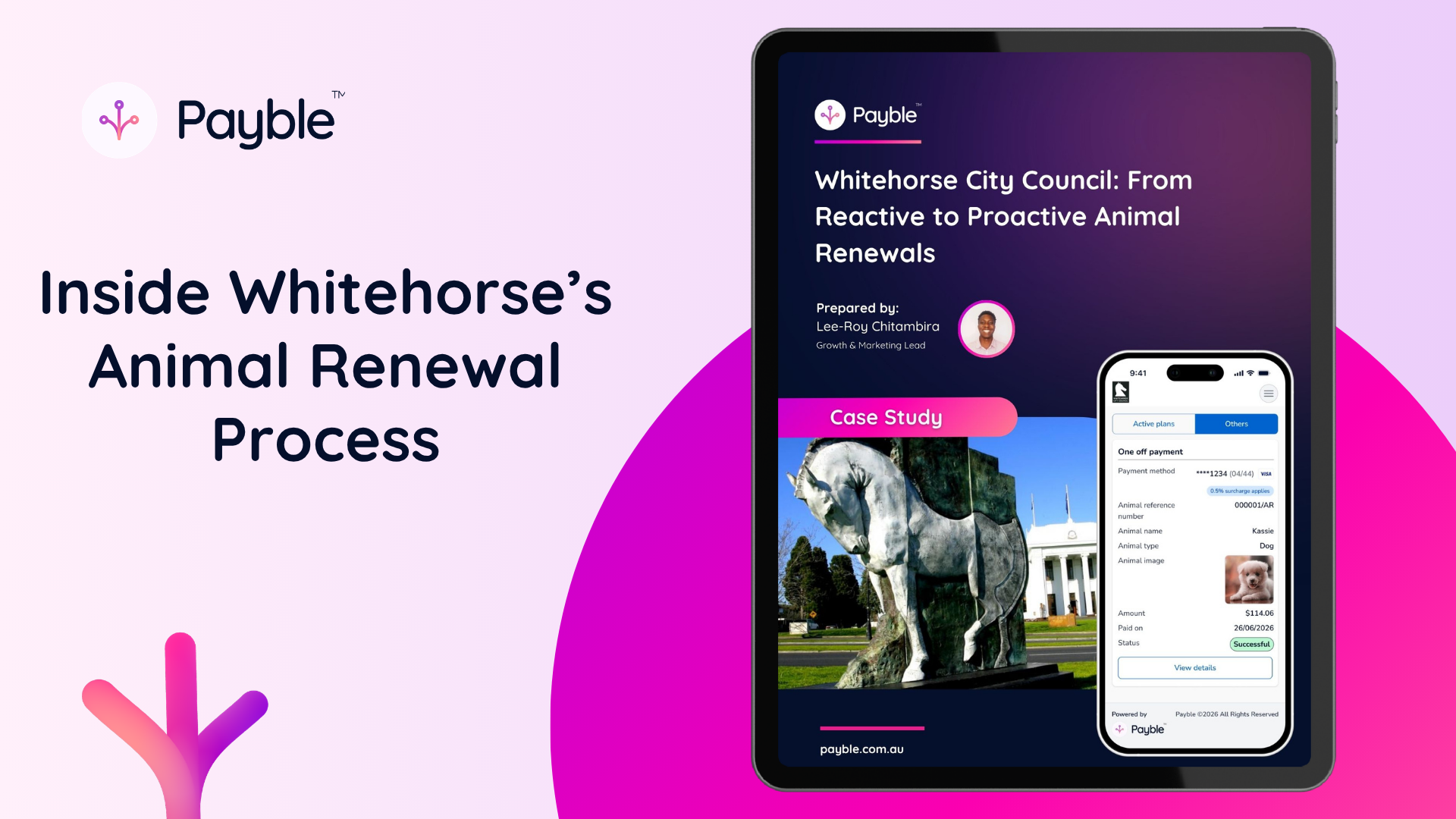
What you will get

782 residents switched on auto-renewal
Adoption grew every month, from 81 plans in February to 782 by June, so next year's registrations are already locked in.

Non-payment fell from 10% to 7.3%
Automated SMS and email reminders with repair links meant 30% fewer missed renewals year on year, with many residents paying within minutes.

$232,159 processed without manual reconciliation
Payments auto-reconciled through BPOINT into Pathway, freeing staff for data cleansing, education and pet reunification.
Latest Webinars
.jpg)
How Councils Can Harness Prepaid Rates to Earn Bonus Interest
Watch this webinar to uncover the benefits of Australian local government councils moving from traditional rating plans to pre-paid rating plans.
.jpg)
What Greater Dandenong Has Learned Moving from Manual to Digital Payment Arrangements
The Payble team discusses with the Greater Dandenong Council their transition from manual to digital payment methods.


