Hutt City Council: NZ Rates & Water Modernisation
21,354 payment plans. $5.5M processed. Not one loaded by hand.
Hutt City Council managed rates payments the same way for 25+ years - paper-based direct debit forms, phone-based hardship arrangements, and staff chasing dishonours one by one. Cost-of-living pressure drove arrears from 2% to over 5% of rates revenue. Direct debit uptake stalled at 42-44% despite constant promotion. And with the Local Government (Water Services) Act 2025 adding a second billing stream to an already stretched team, the status quo wasn't going to hold.
This case study documents how Hutt City went from manual to modern in a single rates cycle - reducing staff workload, supporting struggling ratepayers, and building a payment foundation ready for water reform.
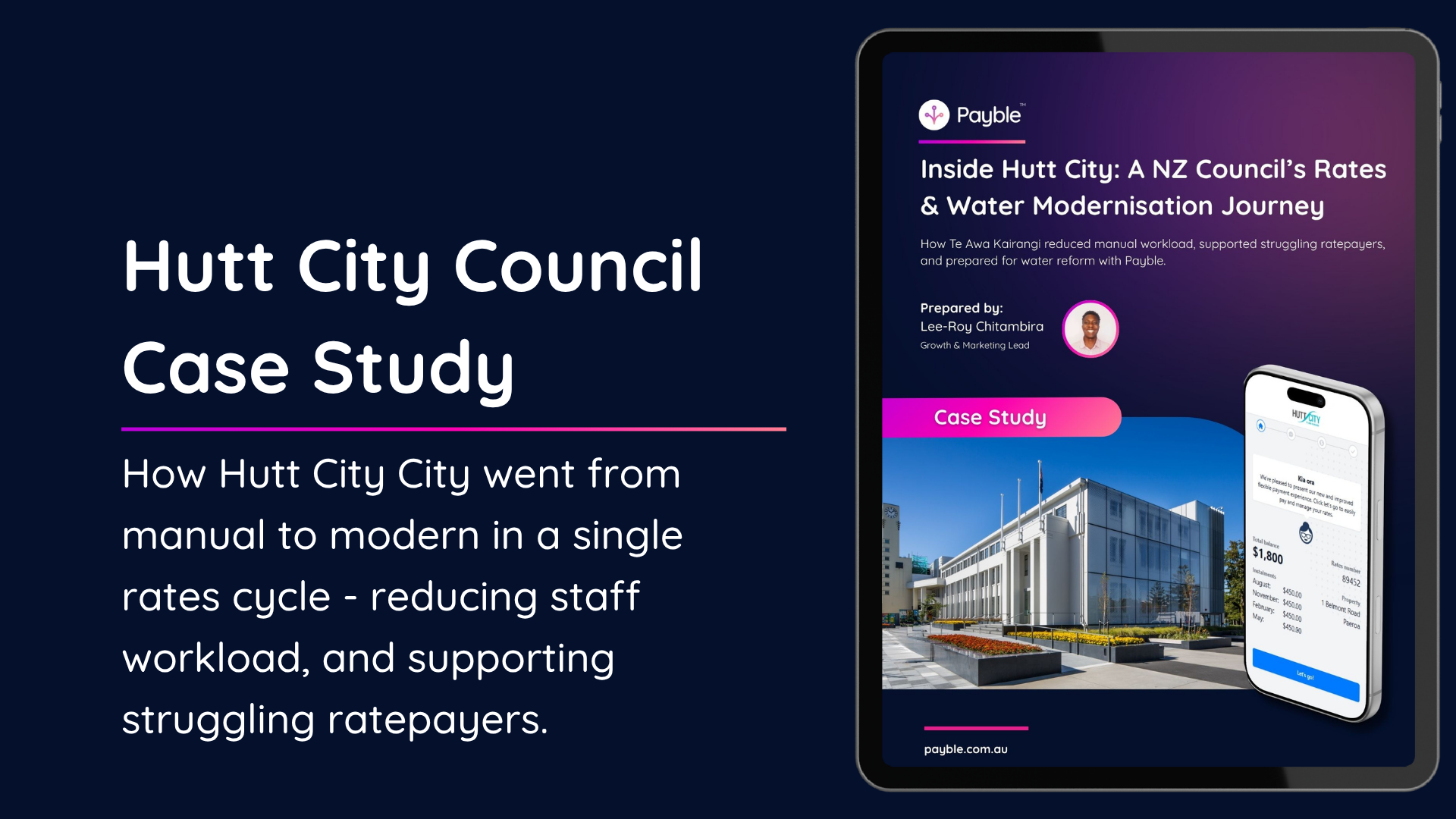
What you will get

$5.5M processed in under 6 months
Hutt City processed $5.5M through a platform its rates team never had to manually manage - 7,832 successful payments across 21,354 active plans.

80.3% of ratepayers self-served on mobile
8 in 10 ratepayers set up their own payment plans via mobile without any staff involvement, returning an estimated 3,200-4,300 hours to the rates team.

4.7/5 resident satisfaction score
Average score from optional post-payment surveys. Only 5.5% of payments failed - cutting the dishonour follow-up that previously consumed staff time every cycle.
Latest Webinars
.png)
Council Infringements: Why 54% Go Unpaid and How to Fix It
Why 50% of every fine issued across Australia goes unpaid, and what City of Casey did to turn it around. A practical session for council finance and compliance leaders covering the economics of infringement collection, the hidden cost of referrals, and how to recover more without chasing.
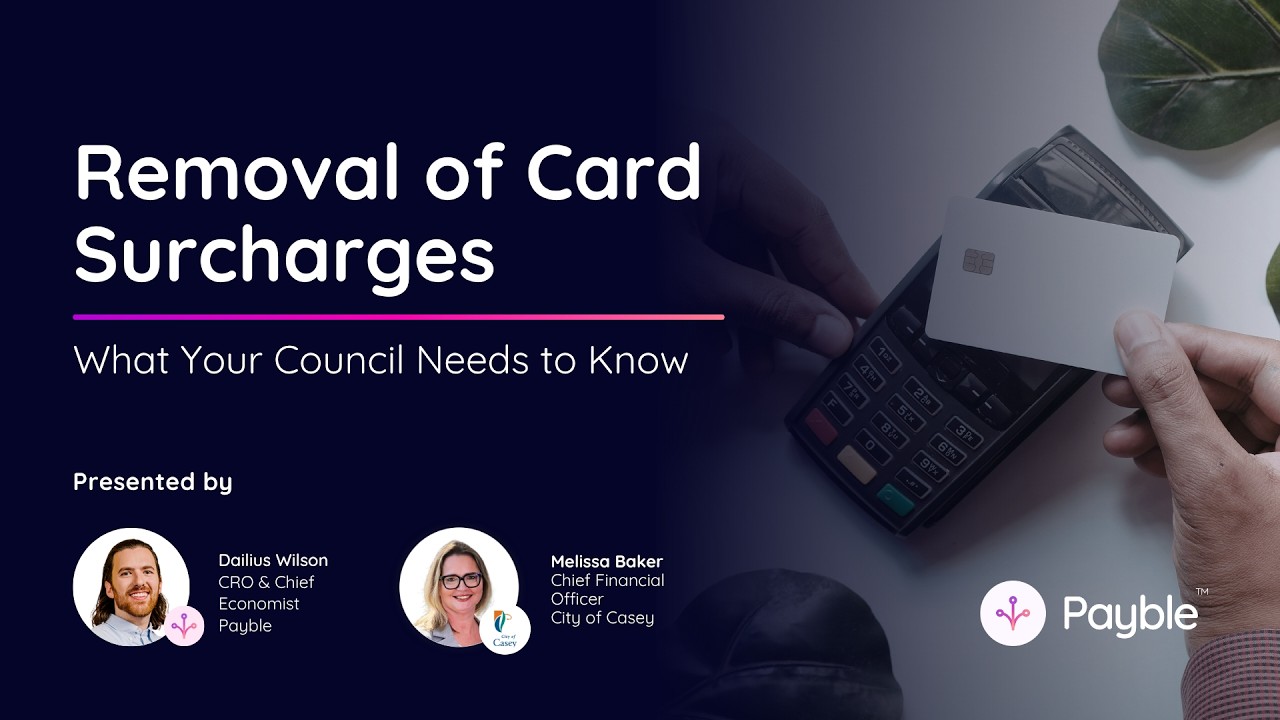
Removal of Card Surcharges - What your Council needs to know
Following the RBA's removal of card surcharges, this webinar covers what the landmark policy change means for councils, their payment systems, and their communities — with October 1 as the compliance deadline
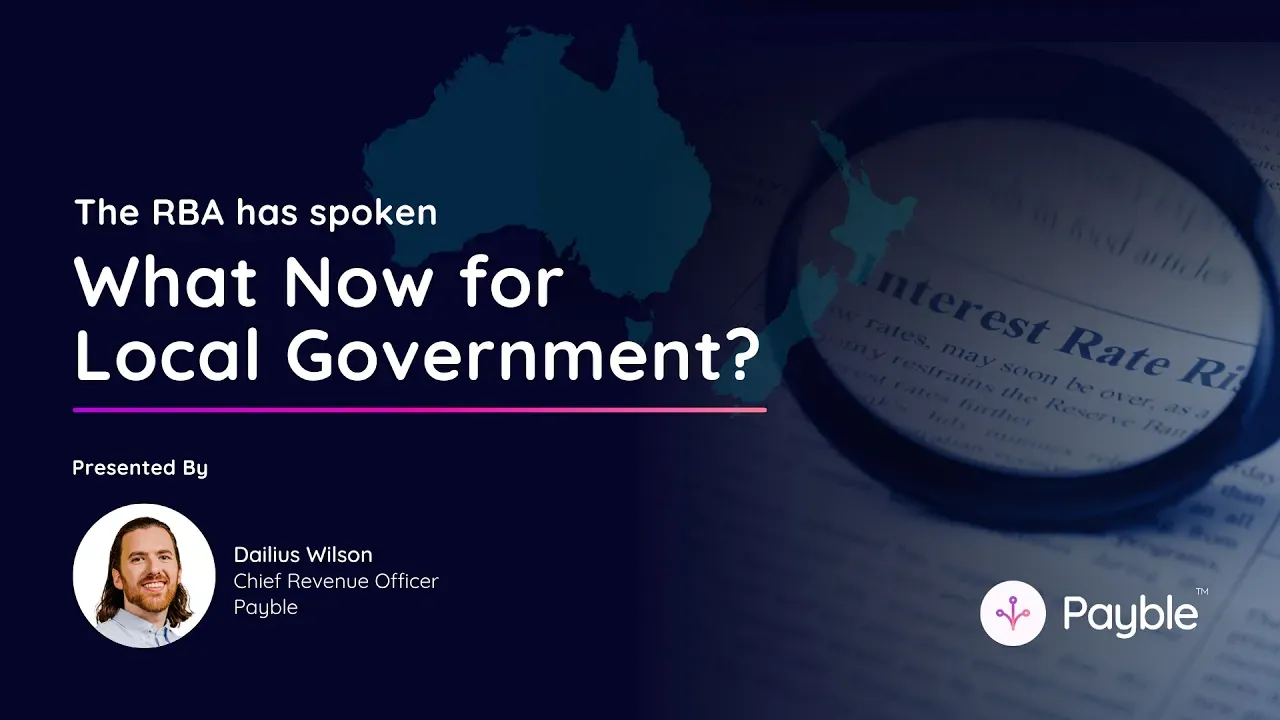
RBA has Spoken - What Now for Local Government?
With over 1% in cash rate rises forecast over the next 4–5 months, local governments face a wave of inflation driven by soaring oil prices, electricity costs up 32.2%, and housing pressures. This webinar explains why it's happening, and what councils need to do now to protect their communities and financial sustainability.

