Hutt City Council: NZ Rates & Water Modernisation
21,354 payment plans. $5.5M processed. Not one loaded by hand.
Hutt City Council managed rates payments the same way for 25+ years - paper-based direct debit forms, phone-based hardship arrangements, and staff chasing dishonours one by one. Cost-of-living pressure drove arrears from 2% to over 5% of rates revenue. Direct debit uptake stalled at 42-44% despite constant promotion. And with the Local Government (Water Services) Act 2025 adding a second billing stream to an already stretched team, the status quo wasn't going to hold.
This case study documents how Hutt City went from manual to modern in a single rates cycle - reducing staff workload, supporting struggling ratepayers, and building a payment foundation ready for water reform.
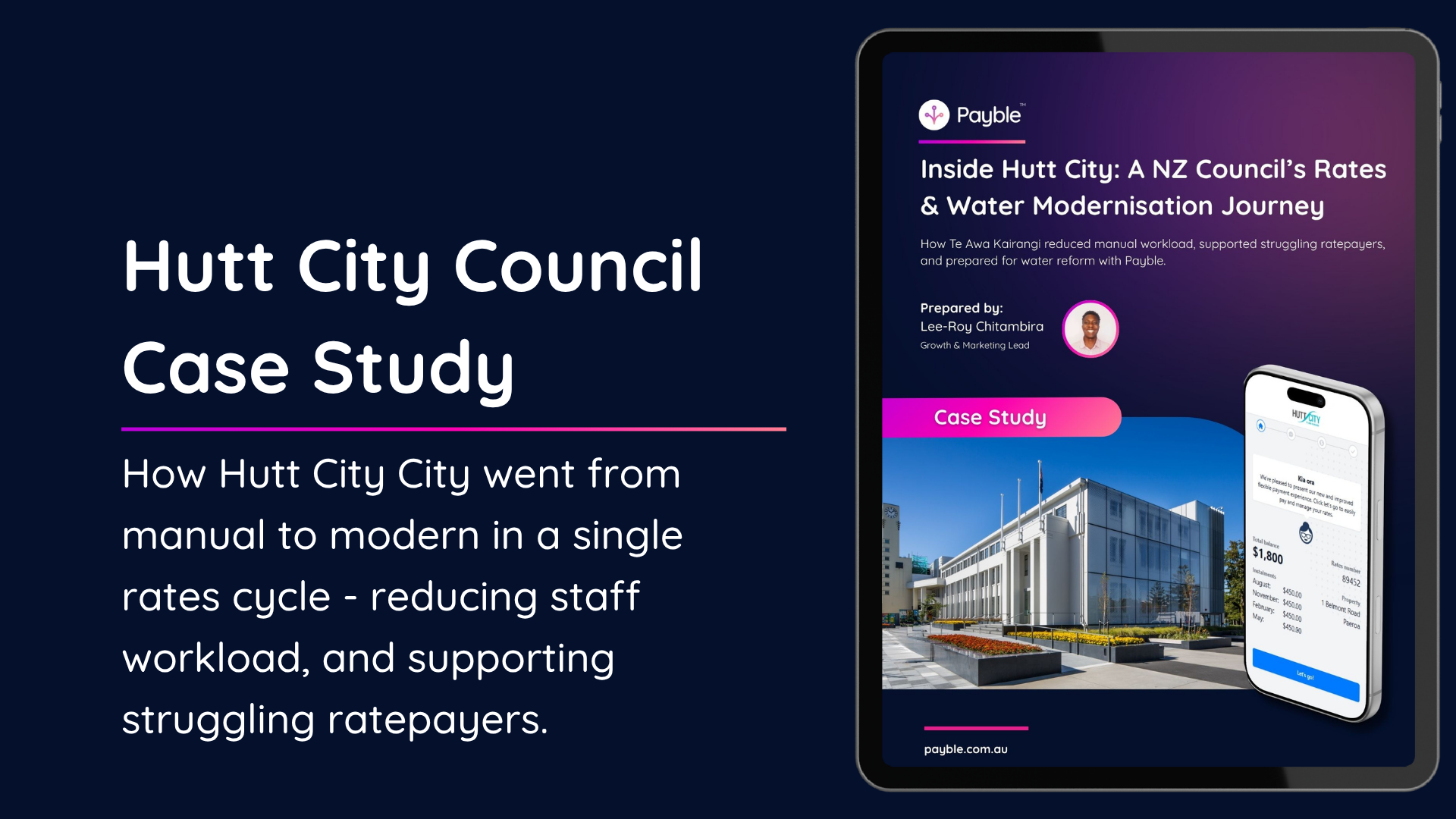
What you will get

$5.5M processed in under 6 months
Hutt City processed $5.5M through a platform its rates team never had to manually manage - 7,832 successful payments across 21,354 active plans.

80.3% of ratepayers self-served on mobile
8 in 10 ratepayers set up their own payment plans via mobile without any staff involvement, returning an estimated 3,200-4,300 hours to the rates team.

4.7/5 resident satisfaction score
Average score from optional post-payment surveys. Only 5.5% of payments failed - cutting the dishonour follow-up that previously consumed staff time every cycle.
Latest Webinars
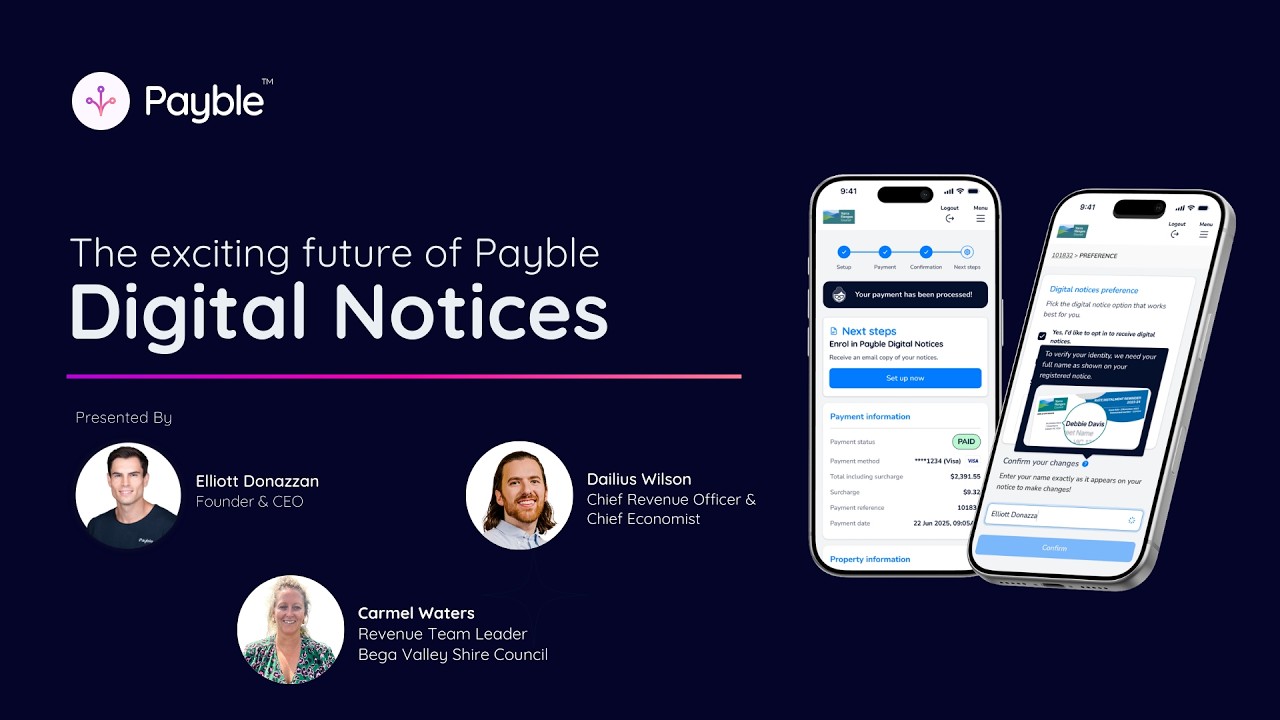
The Exciting Future of Digital Notices
Legacy billing costs councils more than they realise. Bega Valley Shire Council faced manual workflows, limited design control, and postage bills up to $10,000 per run.
Payble Digital Notices changes that, streamlining enrolment, automating reminders, and delivering a seamless, passwordless payment experience.
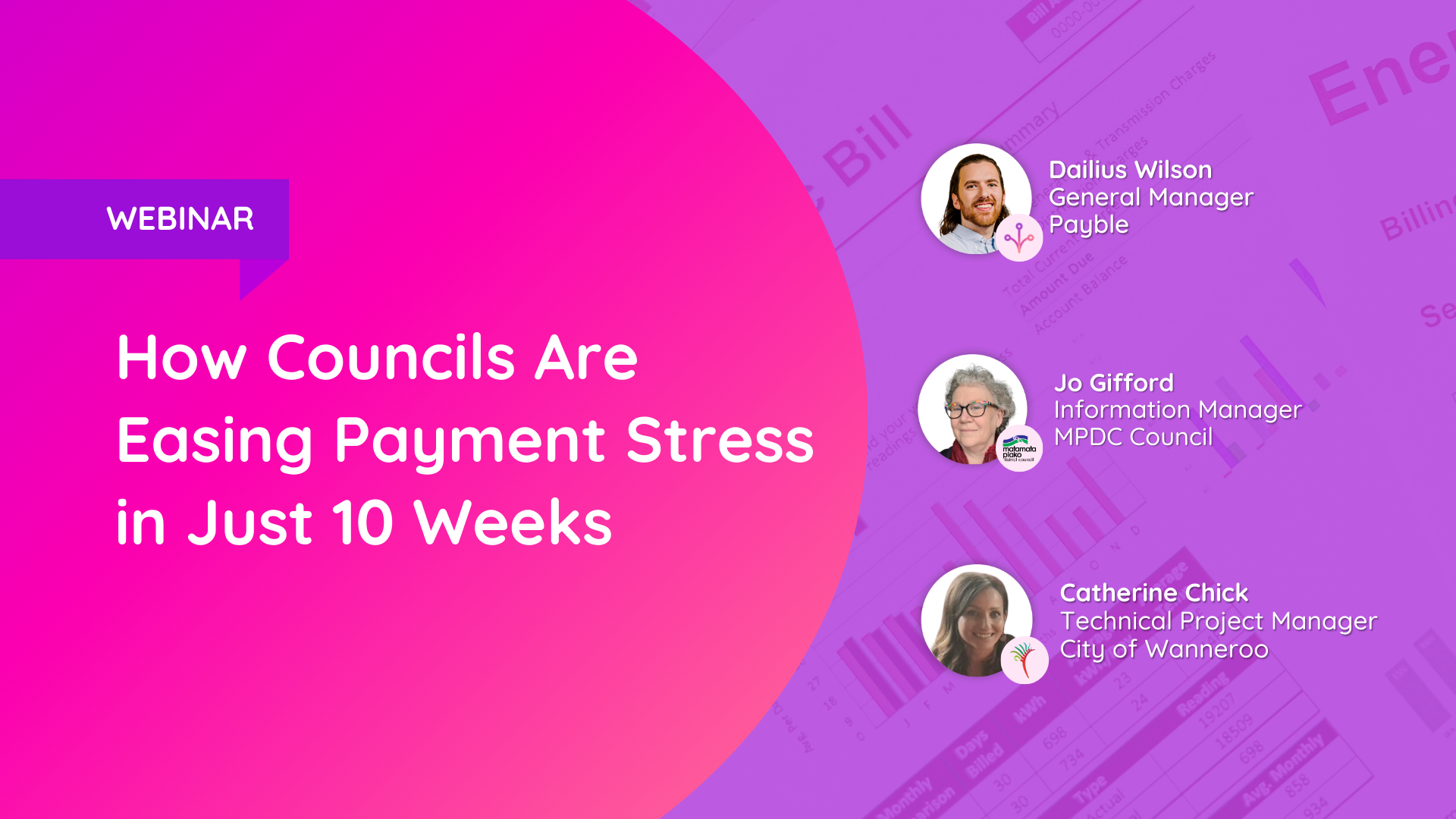
How Councils Across Australia & New Zealand Ease Payment Stress in Just 10 Weeks
Leaders from City of Wanneroo and Matamata‑Piako District Council (NZ) join Dailius Wilson to share real stories, surprising stats, and practical wins. From saving 12,000+ staff hours to helping residents avoid penalties, you’ll see how flexible payments, digital notices, and smarter workflows are transforming local government.

6 weeks. 200,000 residents. One Payment Transformation: with Inner West Council
6 weeks. 200,000 residents. One Payment Transformation: with Inner West Council
A digital transformation that led to 15% adoption rate whilst 1/3 of the community paying their rates via personalised QR codes. This webinar offers practical insights from a CFOs perspective tying into the financial sustainability goals of a council.

